What Oklahoma Weather Does to a Fence
A Tulsa fence has to survive triple-digit summers and hard freezes in the same year, and most fence problems trace back to weather nobody planned for.
September 2, 2026 · 3 min read
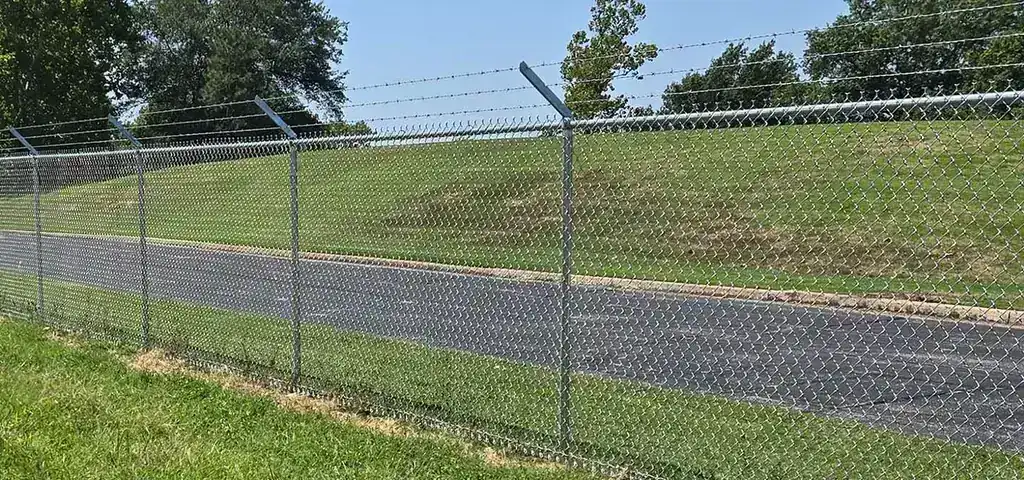
Oklahoma does not give a fence one kind of weather to plan for. A single year in Tulsa runs from triple-digit summer heat to ice storms to spring winds strong enough to flatten a poorly built panel, and the fence in the ground has to take all of it without attention every few months. Most of what looks like a fence problem later started out as a weather problem nobody accounted for at install.
Heat and Sun
Long stretches of intense sun fade paint and stain faster than most people expect, which is why painted or stained wood needs recoating more often here than in a milder climate. Vinyl is formulated to resist UV fading, and aluminum does not have a painted finish to lose in the first place, which is part of why both hold their color for years without attention. Dark powder-coated iron absorbs heat, but the coating itself is what is being tested by the sun, not the steel underneath.
Wind
Wind load is a real engineering number, not a guess, and it is one of the reasons post depth and spacing matter more than the fence panel itself. A solid privacy fence catches far more wind than an open picket or chain link fence of the same height, because there is nowhere for the wind to pass through. That is a real consideration on an exposed Tulsa lot with no windbreak, where a taller solid fence needs deeper posts and tighter spacing than the same fence would need somewhere more sheltered.
Red Clay and Wet Ground
The clay soil common around Tulsa swells when it is wet and shrinks hard when it dries out, and a post set shallow, or without enough concrete around it, will move with that cycle over a few seasons. Heavy steel posts set in concrete, the kind used on cedar fence installs here, are the standard answer, because the concrete gives the post something more stable than clay alone to anchor into. A fence that leans a few years in is very often a post problem, not a panel problem.
Freeze and Thaw
Oklahoma winters are not long, but they do bring hard freezes, and a post set above the frost line can heave when the ground beneath it freezes and expands. Setting posts to the correct depth for the local frost line is unglamorous work that nobody sees once the fence is finished, and it is exactly the kind of thing that separates a fence that is still straight in ten years from one that is not. Ice on a solid fence panel also adds real weight for a short stretch each winter, which is one more reason post depth and spacing are not the place to cut corners on a taller privacy fence.
Sudden Storms and Fallen Limbs
Spring in Tulsa brings fast-moving storms with straight-line wind and hail, and a mature tree near a fence line is as much a threat to the fence as the wind itself. A large limb coming down on a chain link section usually just needs the section straightened or replaced, while the same limb on a wood or vinyl panel can crack boards or shatter a picket outright. Trimming back branches that overhang a fence line before storm season is a small piece of upkeep that prevents a much larger repair later, regardless of which of the seven materials is in the ground.
Drainage Around a Fence Line
Water pooling against a post, rather than running off, is one of the quieter causes of long-term post failure, since standing water works against concrete and wood both. A fence line that follows the low point of a yard is worth a look at how water actually moves through that spot before posts go in, not after, because regrading around an already-set post is a much bigger job than accounting for drainage at install. Gravel backfill around a post base, below the concrete, is a small step that helps water move away instead of sitting against the post.
What Holds Up
Aluminum, vinyl, and galvanized chain link ask the least of an owner year to year, because none of them have a painted surface to maintain and none of them rot. Cedar and other wood fences ask more, in the form of periodic staining or sealing, but they give a look and a warmth the low-maintenance materials do not. None of the seven materials are immune to weather at install. What holds up is the one that was set correctly for the specific stretch of Tulsa weather it has to survive.
Aaron Fence Co · (918) 228-3088
Call (918) 228-3088More articles
Choosing the Right Fence Material for a Tulsa Property
Seven materials do seven different jobs, and picking the wrong one shows up in five years, not on day one.
How an Automatic Gate Gets Specified
Most automatic gates that fail early were specified backwards, with the operator picked before the gate it had to move.