Chain Link
Chain Link Fence Installation
Galvanized or vinyl coated steel, sized to the job, up fast and built to hold.
The gauge and mesh decision comes before anything else
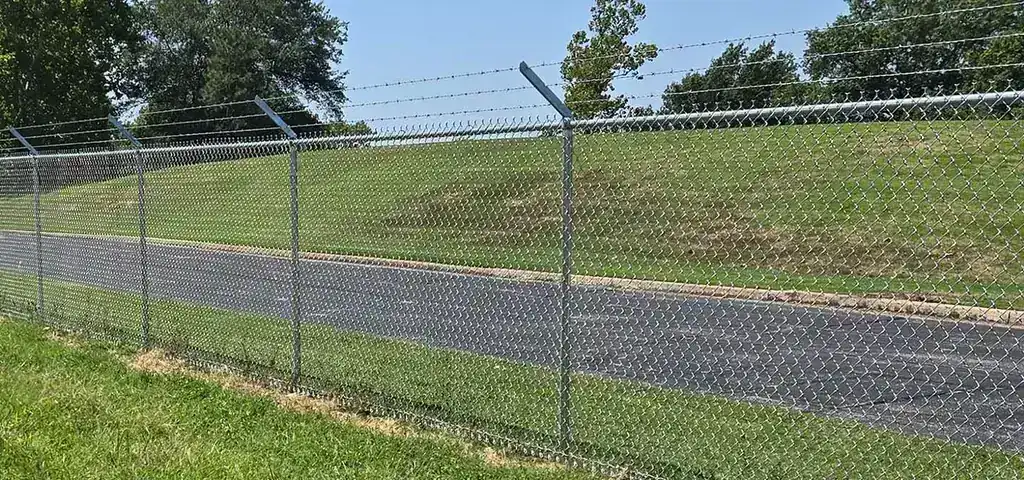
Chain link starts with two choices, not one. The mesh is either galvanized steel, the standard and least expensive option, or vinyl coated, which costs a little more but blends into landscaping and adds a layer over the wire. Then comes gauge, the thickness of the wire itself. A lighter gauge is plenty for a simple residential boundary or keeping a dog in the yard. A heavier gauge earns its keep on a commercial perimeter, a security run, or anywhere livestock or equipment will lean on the fence for years. Height follows the same logic: a four foot line reads as a boundary marker, six foot does the security work most residential customers actually want, and taller commercial runs go up with barbed wire arms where the job calls for it.
Top rail, tension bands, and where a chain link run holds or fails
The mesh gets most of the attention, but a chain link fence lives or dies on the hardware around it. A top rail keeps the fabric from waving in wind and gives the line something rigid to tie into at the top. Tension bands and a tension bar at every terminal post are what keep the mesh drawn tight instead of sagging within a season, and line posts are spaced close enough that a long run does not bow between them. Gates in a chain link run get their own larger posts set deeper in the ground, because a swinging gate puts far more stress on its posts than a fixed section of fabric ever does. Commercial and industrial runs add barbed wire arms, taller mesh, and heavier gauge where the property needs it, all built off the same hardware principles as a residential yard.
Aaron Fence. Licensed #AC44068 and fully insured. OSHA 10 and 30 certified crews. Call (918) 228-3088.
Commercial and industrial runs
A commercial or industrial boundary asks more of the same material a residential yard uses, not a different one. Taller mesh, heavier gauge wire, and barbed wire arms turn the same galvanized or vinyl coated fabric into a perimeter built to hold a larger property line. Gate width scales up too, wide enough for delivery trucks or equipment to pass through without narrowing the drive. See fence materials for contractors if your crew is pricing the hardware for a run of your own.
Chain link fence questions
More detail on materials and pricing lives on the full FAQ page.