How an Automatic Gate Gets Specified
Most automatic gates that fail early were specified backwards, with the operator picked before the gate it had to move.
September 2, 2026 · 3 min read
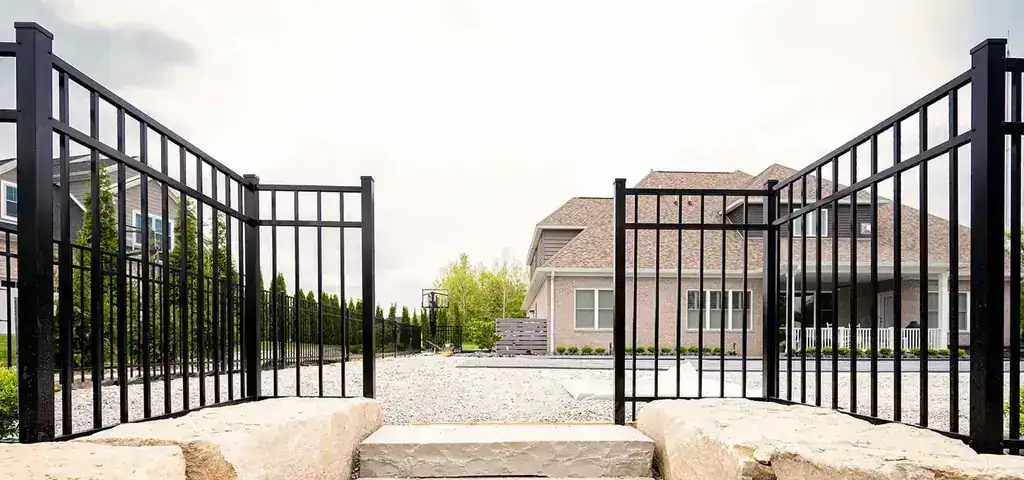
An automatic gate looks like one product from the street, but it is actually two systems working together: the gate itself and the operator that moves it. Specifying one well means sizing the operator to the gate, not the other way around, and most of the automatic gates that fail early were specified backwards, with the operator picked first and the gate built to whatever that operator could handle.
Gate Weight and Cycle Count
The first number that matters is the gate's actual weight, not an estimate. An ornamental iron gate and a wood gate of the same width can weigh very differently, and an operator rated for a light residential gate will burn out fast on a heavy iron one. The second number is cycle count, meaning how many times a day the gate opens and closes. A driveway gate that opens twice a day needs a different duty cycle than a commercial entrance opening fifty times a day, and undersizing for cycle count is one of the most common reasons an operator wears out years before it should.
Swing vs. Slide
Swing gates need clear ground to swing into, which rules them out on a sloped or tight driveway. Slide gates need a straight run of track alongside the opening, which rules them out where there is no room to run one. Neither type is better in general. The site decides which one is possible before either one gets picked.
Access Control
Once the gate and operator are settled, access control is the layer on top: keypads, remote transmitters, phone entry, and card or code readers. Keypad systems like Digi Code are common on residential and light commercial gates. Larger commercial and estate installs more often pair an operator with a dedicated access control panel that can manage multiple codes. This layer has to match how the property is actually used day to day, not just how it looks in a catalog.
Safety Sensors and Why They Matter
A moving gate is a real hazard around vehicles, pedestrians, and pets, which is why photo-eye sensors and edge sensors are standard on modern operators rather than an add-on. A photo eye stops the gate if something breaks the beam mid-travel, and an edge sensor stops it if the gate contacts something as it closes. These are not features to skip on a residential install to save cost, since a gate closing on a car or a person is exactly the failure they exist to prevent, and most manufacturers build them in as a baseline rather than an option.
What Actually Causes a Gate to Fail
Sag is the most common failure on a swing gate, usually from a hinge post that was not set deep enough or braced well enough to carry the gate's full weight over years of opening and closing. On a slide gate, debris and buildup in the track is the more common culprit, along with wheels that were never rated for the gate's actual weight. An operator that trips its own safety sensors repeatedly is often not an operator problem at all. It is usually the gate binding on something, and the operator correctly refusing to force it.
Backup Power and Reliability
A gate that only works when the power is on is a real inconvenience on the day the power goes out, which is why many operators, especially on commercial and estate installs, are specified with a battery backup or a manual release. The manual release matters just as much as the backup battery, since it is the difference between a gate that can be pushed open by hand in an outage and one that simply cannot move until power returns. Neither is worth skipping on a gate that controls the only entrance to a property.
Servicing What Is Already in the Ground
Aaron Fence Co stocks and services operators from most of the major manufacturers, including Doorking, Apollo, FAAC USA, Chamberlain, Sentex, Ameristar, Elite, Linear, Concord Industries, B and B, HySecurity, Digi Code, Autokey, and LiftMaster, which matters most when a gate already has an operator installed and the question is repair rather than a new install. A gate operator that is failing does not always need to be replaced. Sometimes the gate itself needs adjustment, and the operator was never the problem to begin with.
Aaron Fence Co · (918) 228-3088
Call (918) 228-3088More articles
Choosing the Right Fence Material for a Tulsa Property
Seven materials do seven different jobs, and picking the wrong one shows up in five years, not on day one.
What Oklahoma Weather Does to a Fence
A Tulsa fence has to survive triple-digit summers and hard freezes in the same year, and most fence problems trace back to weather nobody planned for.