Choosing the Right Fence Material for a Tulsa Property
Seven materials do seven different jobs, and picking the wrong one shows up in five years, not on day one.
September 2, 2026 · 4 min read
Fencing in Tulsa is not one product. It is seven different products that happen to share a name, and each one solves a different problem. Before picking a look, it helps to start with what the fence actually has to do: keep something in, keep something out, mark a line, or block a view. That answer narrows the seven down to two or three fast.
What the Fence Is Actually For
A pool needs a barrier that a small child cannot climb and that a code inspector will sign off on, so aluminum and ornamental iron get used a lot around pools because the pickets are narrow and the top is not easy to grip. A property line between two yards usually just needs to be visible and durable, which opens the door to chain link or a simple wood fence. Full privacy from a street or a neighbor is a wood or vinyl privacy job, since those are the two materials that come without gaps between boards. Livestock and acreage work is its own category, covered separately below.
The Seven Materials, One at a Time
- Aluminum. Resists rust and warping, holds up in wind, needs almost no upkeep, and works well for pool barriers, pet enclosures, and decorative borders.
- Chain link. Galvanized steel or vinyl-coated, sold in a range of heights and gauges, quick to install, and a budget-friendly way to secure a boundary without blocking the view.
- Vinyl. Will not fade, crack, or peel the way painted wood can, comes in privacy, picket, ranch-style, semi-privacy, and pool profiles, and never needs a coat of paint.
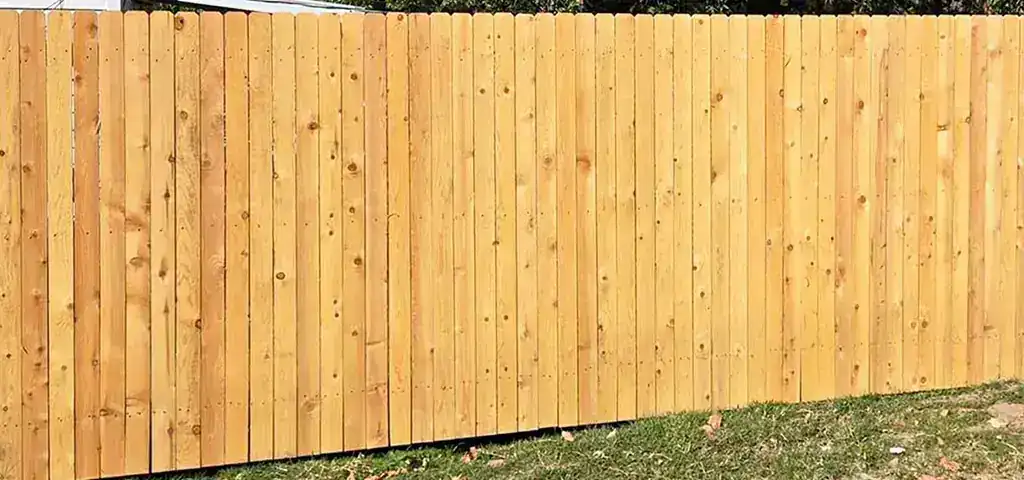
- Wood. The most customizable material and the warmest looking, typically three-quarter inch cedar set on heavy steel posts in concrete, can be painted or stained, and gives full privacy.
- Ornamental iron. Decorative and secure at the same time, used for pool enclosures and property borders where the owner wants a fence that looks built, not just installed.
- Farm fence. Barbed wire, woven wire, high-tensile, electric, post and rail, or pipe, chosen by what is being contained or kept out rather than by appearance.
- Specialty fence. Composite, FenceTrac, R-panel, and Trex fall in this group, built for owners who want long service life with close to no maintenance.
What Actually Wears Out First
Painted wood is usually the first thing to show its age, because the finish weathers before the boards themselves do. Chain link almost never fails structurally, but gate hardware and any barbed wire arms will need attention over the years. Vinyl and aluminum are the two materials least likely to need anything beyond an occasional wash. Ornamental iron holds up well structurally, but the powder coat finish is what protects the steel underneath, so a scratch that reaches bare metal is worth touching up rather than ignoring.
Cost Over the Life of the Fence
The sticker price at install is only part of the real cost. Chain link is usually the cheapest to put in and stays cheap, since there is almost nothing to maintain beyond the occasional gate adjustment. Wood costs more up front than chain link and adds an ongoing cost in stain or paint every few years if the owner wants to keep the color fresh. Vinyl and aluminum sit at the higher end at install but ask for almost nothing afterward, which is why a fence that looks expensive on day one can end up costing less than a cheaper fence by year ten. Ornamental iron and specialty materials like composite or Trex fall somewhere in between, trading a higher install cost for a longer service life than wood.
Height, Setback, and Sight Lines
Material choice and height choice are related but not the same decision. A four-foot aluminum fence around a pool reads very differently from a six-foot privacy fence along a back property line, and the same material can do either job depending on how tall it is built. Corner lots and driveways add another wrinkle, since a solid fence near a sight line can block a driver's view of the street in a way an open picket or chain link fence would not. Deciding on height and where the fence sits relative to the property line is worth doing before a single post gets ordered, not after.
Matching Material to the Property
Aaron Fence Co has installed all seven of these lines around Tulsa since 1959, so the honest answer to which one is best is usually another question: what does this fence need to survive, and what does it need to look like doing it. A rental property with a tight budget and a straightforward boundary line is a different job than a pool enclosure that has to pass inspection, and both are different again from a half-acre with a dog that tests every gap in a fence line. Walking the property with someone who has installed all seven materials locally tends to be faster than researching all seven from a spec sheet.
Aaron Fence Co · (918) 228-3088
Call (918) 228-3088More articles
What Oklahoma Weather Does to a Fence
A Tulsa fence has to survive triple-digit summers and hard freezes in the same year, and most fence problems trace back to weather nobody planned for.
How an Automatic Gate Gets Specified
Most automatic gates that fail early were specified backwards, with the operator picked before the gate it had to move.