Matching Farm Fence to What You Are Actually Containing
A fence built to hold cattle is not the fence that keeps coyotes out of a chicken run, and six farm fence types exist because six jobs need different answers.
September 2, 2026 · 4 min read
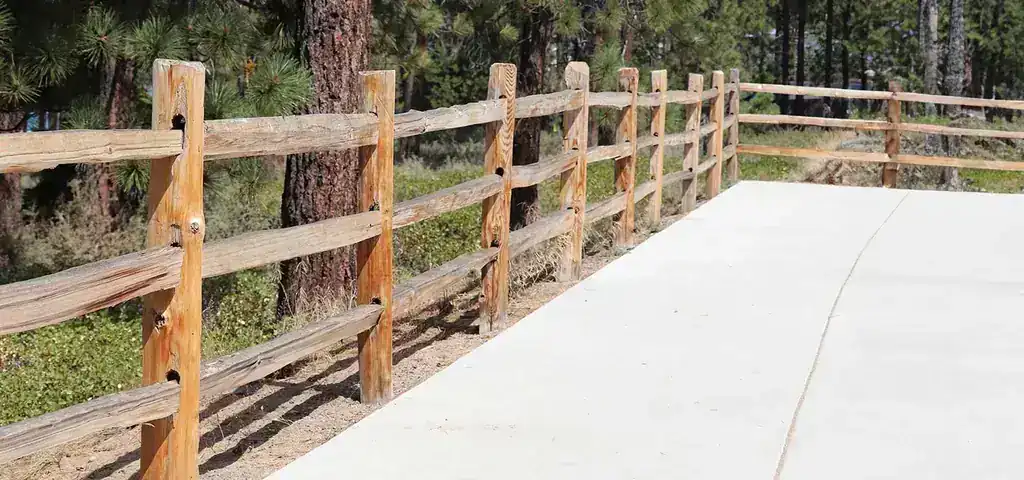
Farm and acreage fencing gets decided by one question before anything else: what is this fence keeping in, or keeping out. A fence built to hold cattle is not the same fence that keeps coyotes away from a chicken run, and a boundary line that just needs to mark where one property ends and another begins is a third thing again. Several fence types exist for farm use because several different jobs actually need different answers.
Livestock Containment Comes First
Cattle mostly respect a fence line rather than test it, which is why a lower-cost option like barbed wire has stayed standard for cattle containment for generations. Horses are a different case, because barbed wire can injure a horse that gets tangled in it, so woven wire or high-tensile smooth wire is the more common choice where horses are kept. Smaller or more determined livestock, goats especially, need tighter woven wire spacing than cattle do, since goats will find and use any gap a fence leaves them.
Barbed Wire, Woven Wire, and High-Tensile
- Barbed wire. The standard for cattle containment, low cost per foot, not suited to horses or to close-spaced livestock.
- Woven wire. Tighter mesh spacing, safer around horses and smaller livestock, and often the choice where a fence needs to hold more than one type of animal.
- High-tensile smooth wire. Strong under tension and springs back after impact, used for both livestock containment and long boundary runs.
Electric Fence
Electric fencing is less about physical strength and more about training an animal to respect a boundary line, which makes it useful for pasture rotation, where the fence line needs to move as grazing areas change. It is not typically the fence used to keep out predators or determined wildlife, since it depends on the animal on the other side learning to avoid it rather than being physically stopped by it.
Post and Rail, and Pipe
Post and rail fencing reads more as a boundary and appearance choice than a containment barrier on its own, often used along a road frontage or a property line where the look matters as much as the function. Pipe fencing is the heavy-duty end of the range, chosen where strength matters more than cost, commonly around working pens, gates that see constant traffic, or anywhere a lighter fence would eventually get pushed over. A pipe corral or loading pen also holds up to the kind of daily contact from livestock that would eventually loosen a lighter wire fence.
Pasture Rotation Changes the Fence Question
An operation that rotates livestock between pastures through the season is really solving two problems at once: a permanent perimeter fence around the whole property, and a set of interior cross-fences that may need to move or adjust as grazing plans change. High-tensile and electric fence tend to suit the interior cross-fencing better than a permanent barbed wire line would, since they are faster to reconfigure without ripping out and resetting posts. The perimeter, by contrast, is usually worth building to the heaviest standard the budget allows, since it gets replaced far less often than an interior line.
Predator Pressure and Property Lines
Keeping predators away from smaller livestock, like a chicken run or a lambing pen, usually calls for tighter mesh spacing than general livestock containment needs, since the animal being kept out is smaller and more persistent than a coyote testing a cattle fence. A boundary line with no livestock on either side is a simpler problem: adjustable heights and standard field fence usually satisfy both the property marking and any wildlife consideration, without the cost of a heavier containment fence.
Gates on a Working Property
A gate on a farm or acreage fence line gets asked to do more than a residential driveway gate, since it may see a truck and trailer, loose livestock nearby, and daily use by more than one person on the property. Width matters as much as material here, since a gate sized for a truck alone can be too narrow once a trailer is attached, and a gate that has to be dragged open across uneven ground will sag faster than one set on level, well-drained footing. Sizing the gate to the widest thing that actually needs to pass through it, rather than to what looks proportional, avoids a rebuild once the wrong equipment shows up needing to get through.
Acreage in and around Tulsa covers everything from small hobby farms to working cattle operations, and the right fence for one is very often the wrong fence for the other. Deciding what the fence has to contain, or keep out, before choosing wire type or post spacing saves a rebuild a few years later.
Aaron Fence Co · (918) 228-3088
Call (918) 228-3088More articles
Choosing the Right Fence Material for a Tulsa Property
Seven materials do seven different jobs, and picking the wrong one shows up in five years, not on day one.
What Oklahoma Weather Does to a Fence
A Tulsa fence has to survive triple-digit summers and hard freezes in the same year, and most fence problems trace back to weather nobody planned for.